
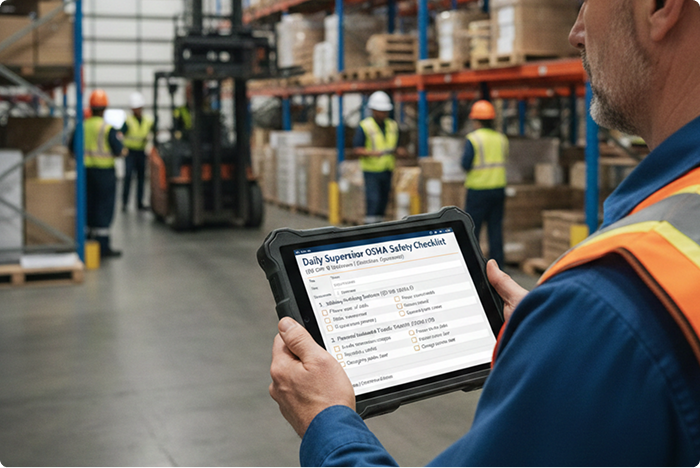
Supervisor’s Daily OSHA Reality: What to Check, What to Catch, and What to Fix
Even with the best written safety programs, real-world pressures demand that warehouse supervisors bridge potential safety gaps. OSHA compliance does not commonly fail because standards are unclear—it fails because hazards become routine. Most citations issued by the Occupational Safety and Health Administration stem from conditions were seen, understood, and allowed to persist.
Some of the most common OSHA-regulated areas supervisors should be checking daily, can bring focus on what the regulations are designed to prevent and what supervisors are expected to control.

Walking-Working Surfaces (29 CFR 1910 Subpart D)
OSHA requires walking and working surfaces to be maintained in a clean, orderly, and safe condition to prevent slips, trips, and falls. Because these hazards are visible and ongoing, OSHA treats failures here as a breakdown of daily supervision, not a one-time oversight.
Daily supervisor checks should include:
- Aisles and walkways clear of pallets, carts, cords, and debris
- Floors free of spills, oil, grease, or standing water
- Dock plates secured and in good condition
- Temporary floor hazards marked or corrected immediately
Tip for Supervisors: If an obstruction is visible during normal operations, OSHA assumes it was tolerated by management.

Powered Industrial Trucks / Forklifts (29 CFR 1910.178)
The standard requires that only trained and evaluated operators use powered industrial trucks and that the equipment is operated safely at all times. Supervisors are responsible for enforcing authorization requirements, conducting inspections, and ensuring safe behavior—not just assigning training.
Daily supervisor checks should include:
- Operators are trained, evaluated, and authorized
- Pre-use inspections completed and documented
- Seatbelts worn
- No riders on forks or pallets
- Speed controlled in pedestrian areas
Tip for Supervisors: Be consistent, one “just this once” exception signals a system-wide failure to OSHA.
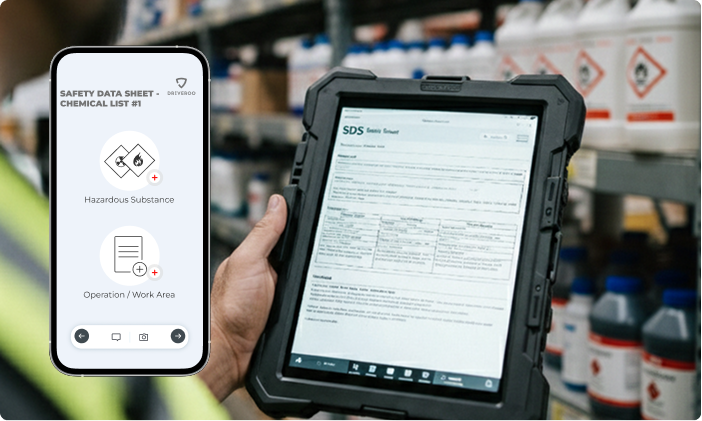
Hazard Communication – Chemicals (29 CFR 1910.1200)
Hazard Communication applies anywhere hazardous chemicals exist, including warehouses using cleaners, lubricants, or battery chemicals. OSHA requires labeling, SDS access, and employee awareness to ensure workers understand chemical risks.
Daily supervisor checks should include:
- All containers properly labeled, including secondary containers
- Safety Data Sheets accessible to employees
- Employees able to identify chemicals they use
Tip for Supervisors: From an OSHA inspection perspective, an unlabeled container is treated as an immediate exposure risk.
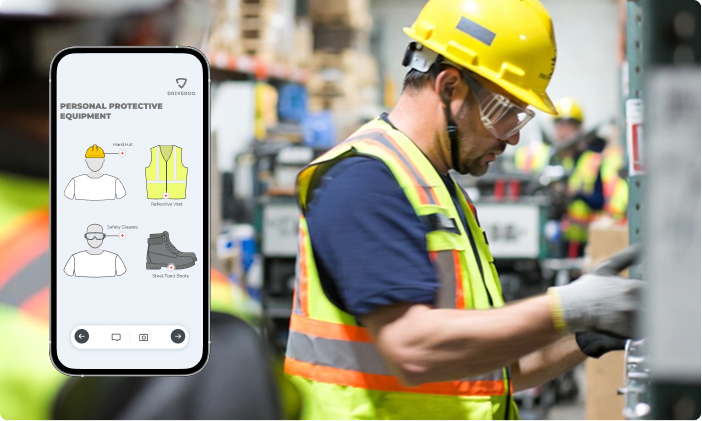
Personal Protective Equipment (29 CFR 1910 Subpart I)
OSHA requires hazard assessments, appropriate PPE selection, and enforcement of PPE use. Supervisors are the enforcement mechanism—uneven application is viewed as ineffective control.
Daily supervisor checks should include:
- Required PPE worn in designated areas
- PPE in good condition
- PPE rules enforced consistently across all employees
Tip for Supervisors: Inconsistent enforcement is just as bad as no enforcement at all.
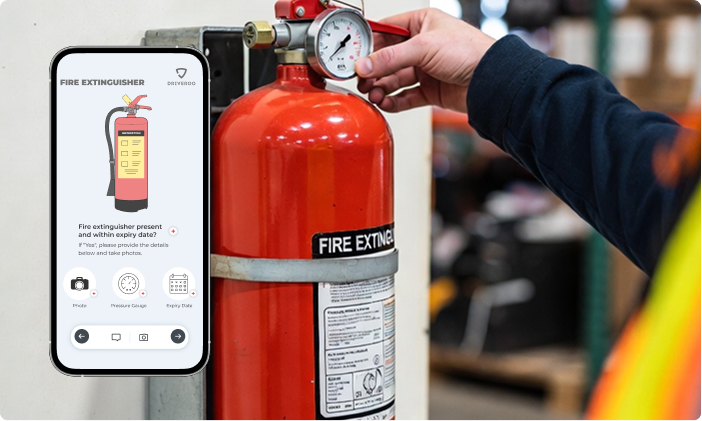
Emergency Exits & Fire Protection (29 CFR 1910 Subparts E & L)
These standards ensure employees can evacuate safely and fire protection systems function as designed. Life-safety violations are aggressively enforced due to their potential severity.
Daily supervisor checks should include:
- Exit doors unlocked and unobstructed
- Exit routes clearly marked and illuminated
- Fire extinguishers accessible and inspected
- Storage at least 18 inches below sprinkler heads
Tip for Supervisors: The idea of “temporary storage” in exit paths is not acceptable to OSHA.
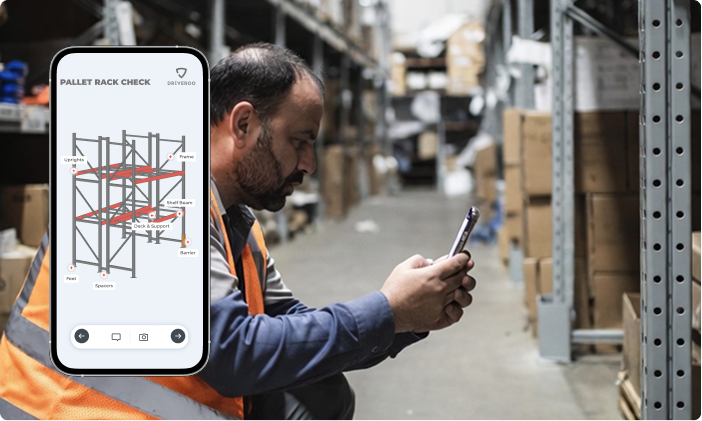
Material Storage & Racking Safety (29 CFR 1910.176)
OSHA requires materials to be stored in a stable and secure manner to prevent collapse or falling objects. Once racking damage is observed, it becomes a known hazard requiring action.
Daily supervisor checks should include:
- Pallets stacked securely
- Racks free from bent uprights or missing anchors
- Load capacity signage visible
- No climbing on racking
Tip for Supervisors: Unreported rack damage becomes a supervisory failure.
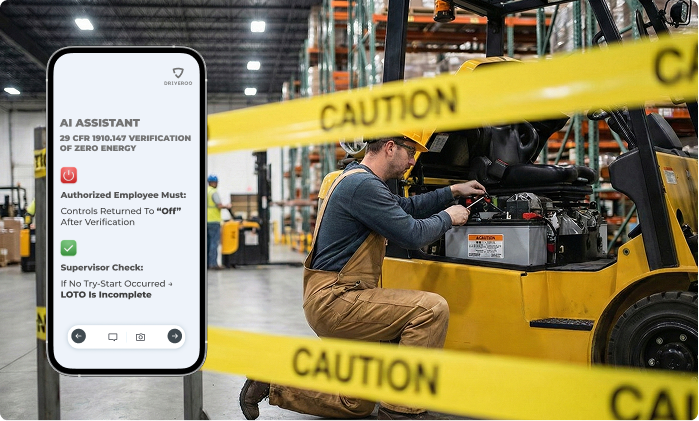
Lockout/Tagout – Servicing and Maintenance (29 CFR 1910.147)
This regulation protects workers from unexpected energization during servicing or maintenance. Supervisors must ensure lockout is used whenever guards are removed or employees enter hazardous zones.
Daily supervisor checks should include:
- Proper lockout procedures followed during servicing
- Only authorized employees apply locks
- Stored energy relieved
- Try-start verification performed
Tip for Supervisors: If energy can flow into the equipment, lockout is required—no shortcuts.
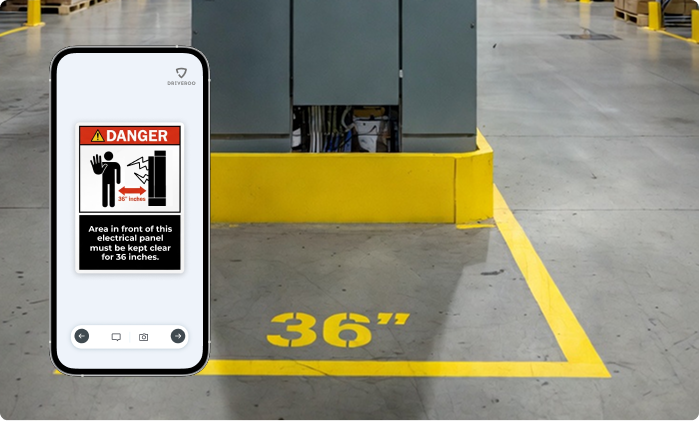
Electrical Safety (29 CFR 1910 Subpart S)
Electrical standards require safe use and maintenance of electrical systems. Many violations arise from poor housekeeping rather than technical defects.
Daily supervisor checks should include:
- No damaged cords or exposed wiring
- Extension cords not used as permanent wiring
- Electrical panels unobstructed (36-inch clearance)
- No daisy-chained power strips
Tip for Supervisors: If a panel can’t be accessed instantly, OSHA considers it blocked.

Training and Documentation (Multiple Standards)
Across OSHA regulations, training must be completed, understood, and documented. Supervisors ensure employees are trained before exposure and that records exist to prove it.
Daily supervisor checks include:
- New hires trained before task assignment
- Required refresher training current
- Incidents and near-misses documented
Tip for Supervisors: If it isn’t documented, OSHA treats it as if it never happened.

The Supervisor’s Role in OSHA Compliance
OSHA compliance ultimately depends on daily execution, not written programs or annual training sessions. Supervisors are the critical point where regulatory requirements become real, because they control daily conditions, work practices, and corrections on the floor. From OSHA’s perspective, supervisors act on behalf of the employer—when hazards are visible and uncorrected, the organization is assumed to have accepted the risk. Effective supervisors do more than enforce rules; they set expectations, correct unsafe conditions immediately, and model consistent behavior that reinforces safety as a core company value. When supervisors actively lead safety efforts, compliance improves, incidents decrease, and safety stops being a separate initiative and becomes part of how work is done.


